
Amphoriscus
Restoration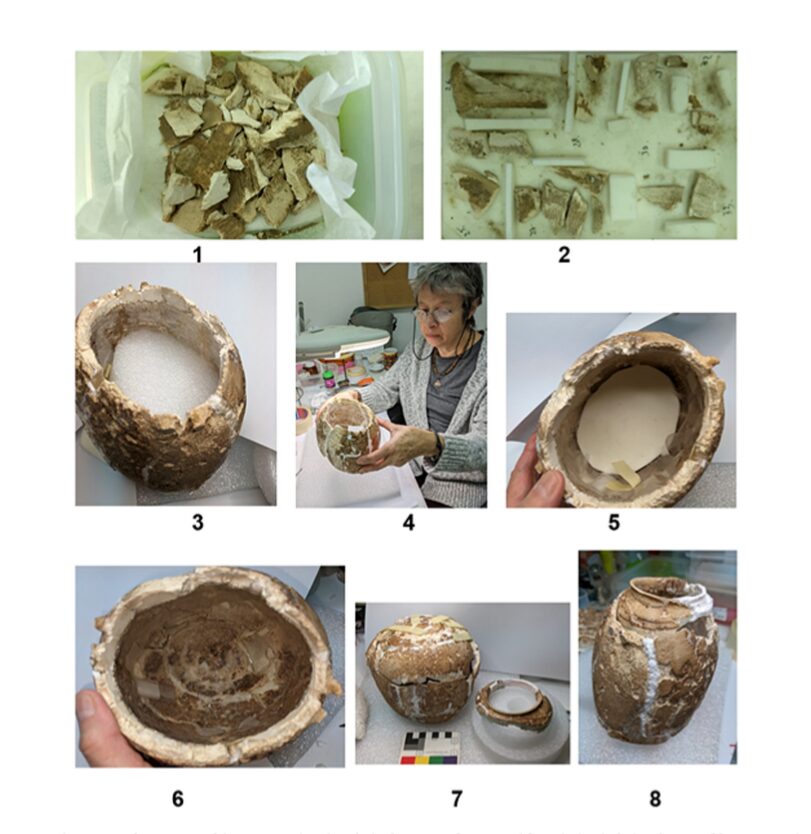
Amphoriscus Restoration
Conservation Treatment of Amphoriskos
The Israel Antiquities Authority (IAA) received numerous ivory fragments recovered during the excavation. The fragments were extremely fragile and heavily soiled, making preliminary consolidation essential prior to any cleaning.
Consolidation
After a series of tests, a 3% solution of Paraloid B-72 was selected as the primary consolidant. The resin was prepared in a 50:50 mixture of ethanol and acetone. In areas requiring additional strength, a 5% B-72 solution was applied.
The consolidation method varied according to the size, thickness, and condition of each fragment. Smaller or more robust fragments were immersed in the solution, while others were treated by controlled dripping using a pipette or by application with a soft brush. Following consolidation, surface cleaning was carried out using soft brushes.
Joining and Structural Stabilization
Experimental attempts to join the fragments demonstrated that complete reconstruction was not possible. Many fragments were missing, and prolonged burial—approximately 6,000 years—had caused deformation of the surviving pieces, preventing precise joins. As a result, a gap-filling material was prepared to stabilize the structure and support partial reconstruction.
The gap-filling paste consisted of bone powder, glass microballoons, and Paraloid B-72 as a binding agent. Thin Japanese paper was employed both within the fills and for the reinforcement of particularly fragile areas.
Loss compensation was carried out in areas where ivory was entirely missing, in order to improve stability and legibility. The interior of the amphoriskos was further reinforced using strips of Japanese paper adhered with B-72.
Reassembly and Retouching
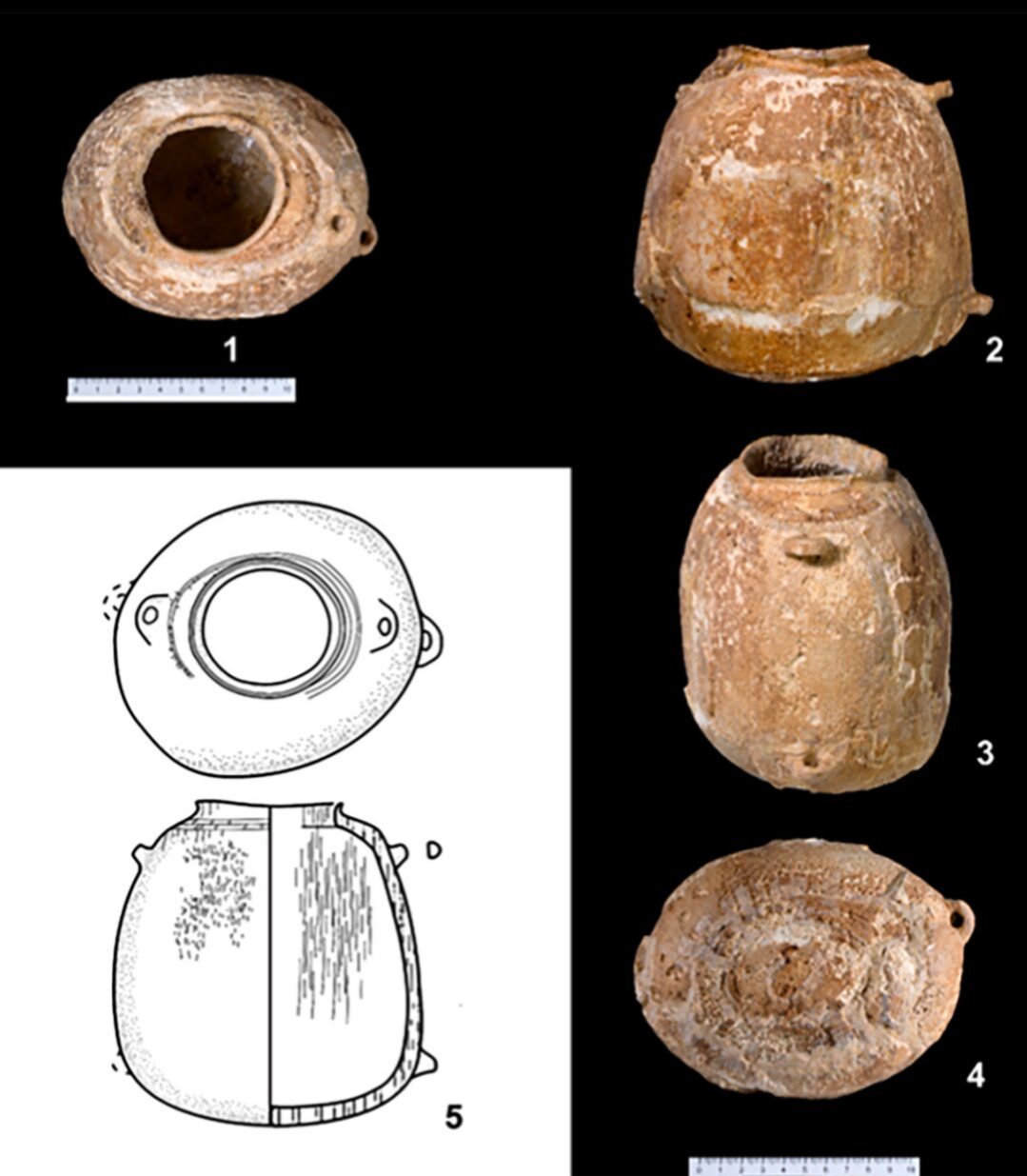
The final stage of the treatment involved the attachment of the handles. Of the four original handles, sufficient fragments survived to reconstruct two.
Retouching was applied to the restored areas. The intervention remains clearly discernible to a trained professional, while significantly improving the overall aesthetic appearance of the object.
Olga Negnevitsky