
Parokhet Tedeschi
Restoration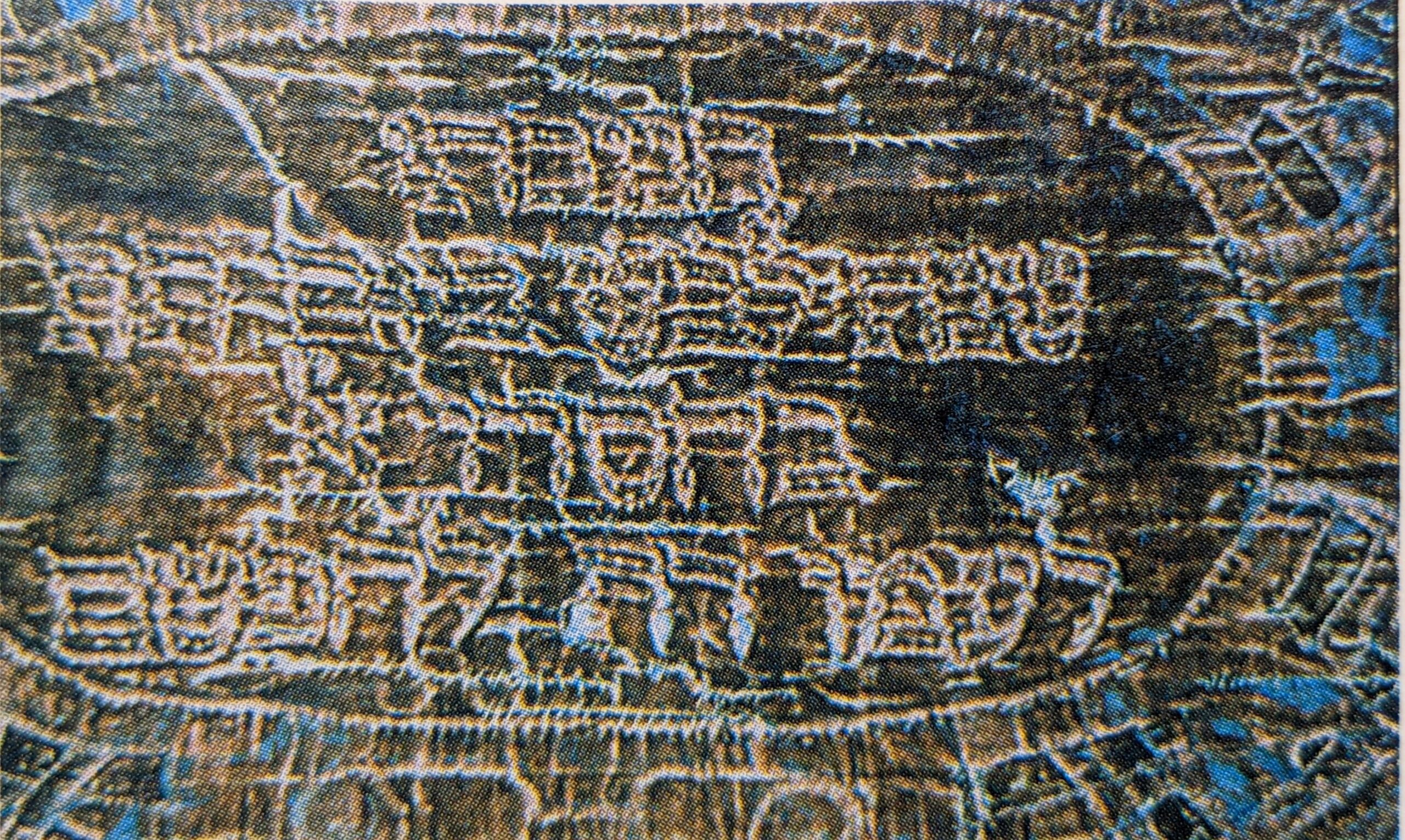
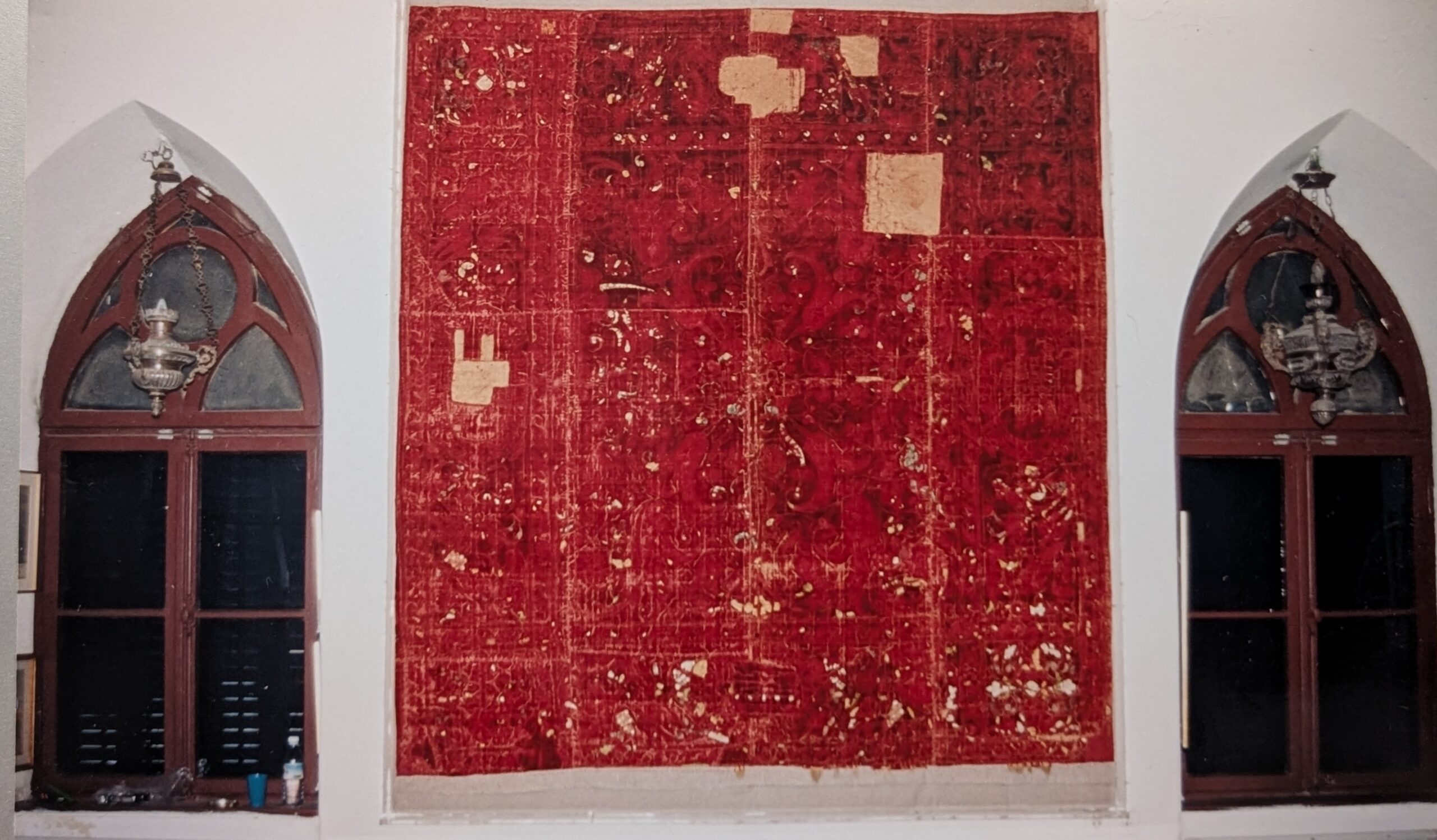
Parokhet Tedeschi Restoration
Historical Background
This Torah Ark Curtain, known as the Parokhet Tedeschi, is a remarkable example of 16th-century Jewish textile art. It was donated to the Museum of Italian Jewish Art in Jerusalem in 1992 by the daughters of Professor Vittorio Tedeschi, in memory of their father.
The curtain is composed of four lengths of cloth, each approximately 60 centimeters wide—the typical width of Renaissance looms. These were pieced together and sewn in alternating directions, creating a subtle variation in color and texture across the surface. The result is an imposing textile, both in size and artistic execution.
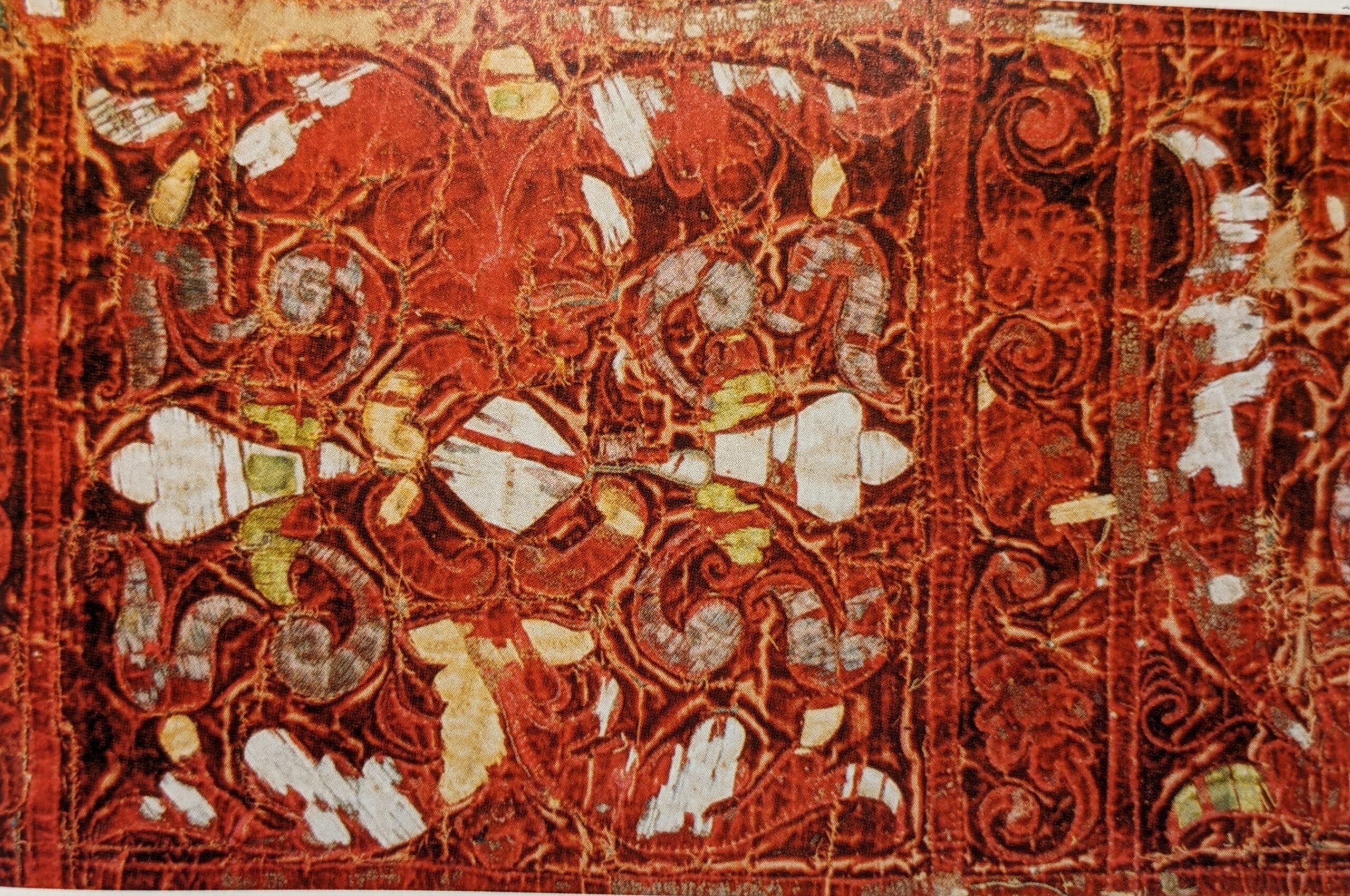
The embroidery, worked in silver thread intertwined with silk, follows a strictly symmetrical, radial design. Its base is silk velvet, onto which appliqués of silk fabric in various colors were carefully stitched. The curtain bears a single preserved inscription within a cartouche:
“Hanukato shenat lavash be-yom tet be-hasdo El le-‘amo date le-hofsham”
This inscription dates the curtain to the Jewish year 5332 (1572 CE), specifically to the Festival of Weeks (Shavuot), when the giving of the Torah is commemorated. According to rabbinic tradition, “Only one who studies Torah is considered free.” This makes the curtain the oldest surviving Jewish embroidered textile with a verifiable date. Based on its style and technique, it is believed to have originated in Ferrara, Italy.
Condition on Arrival
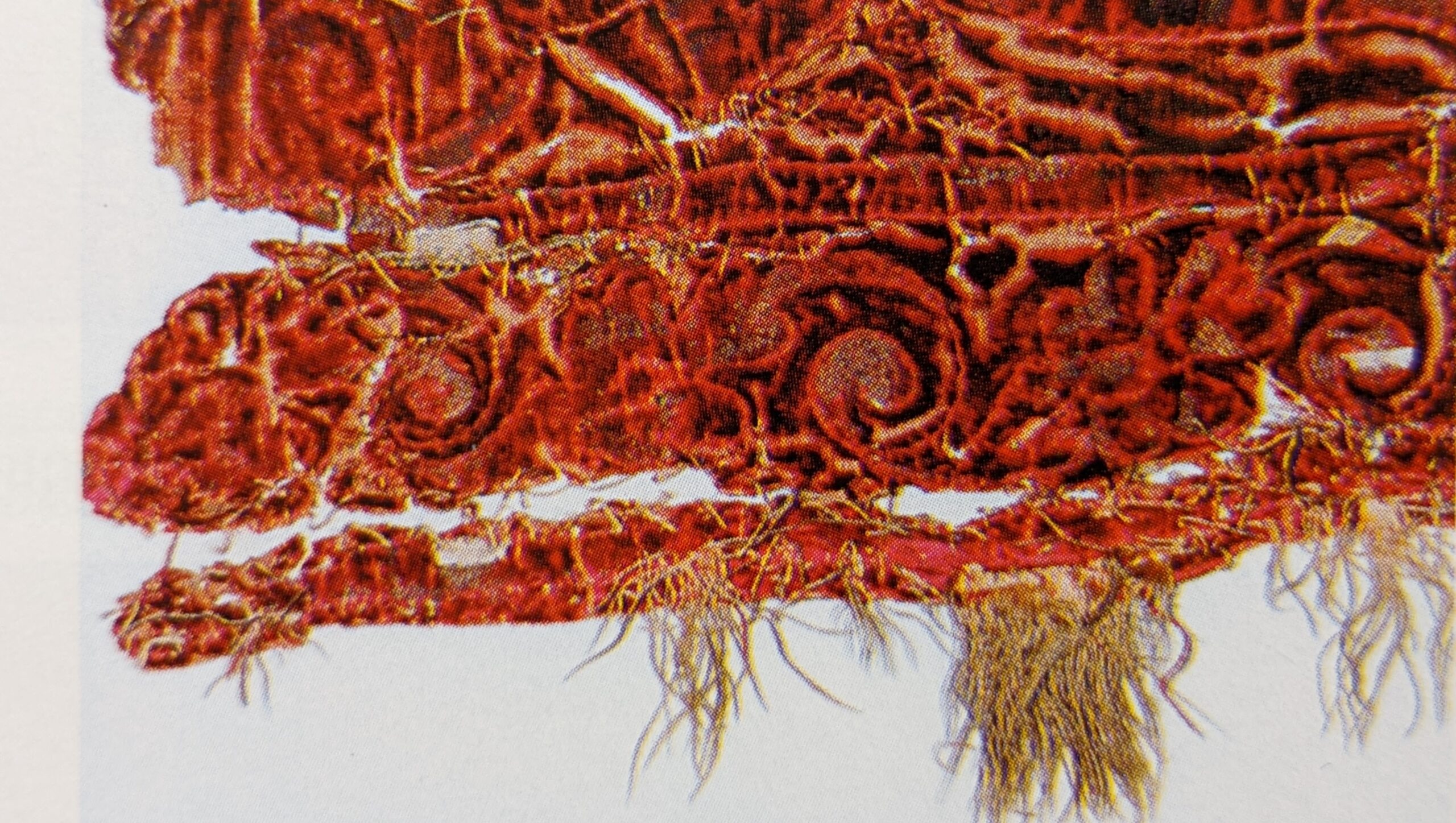
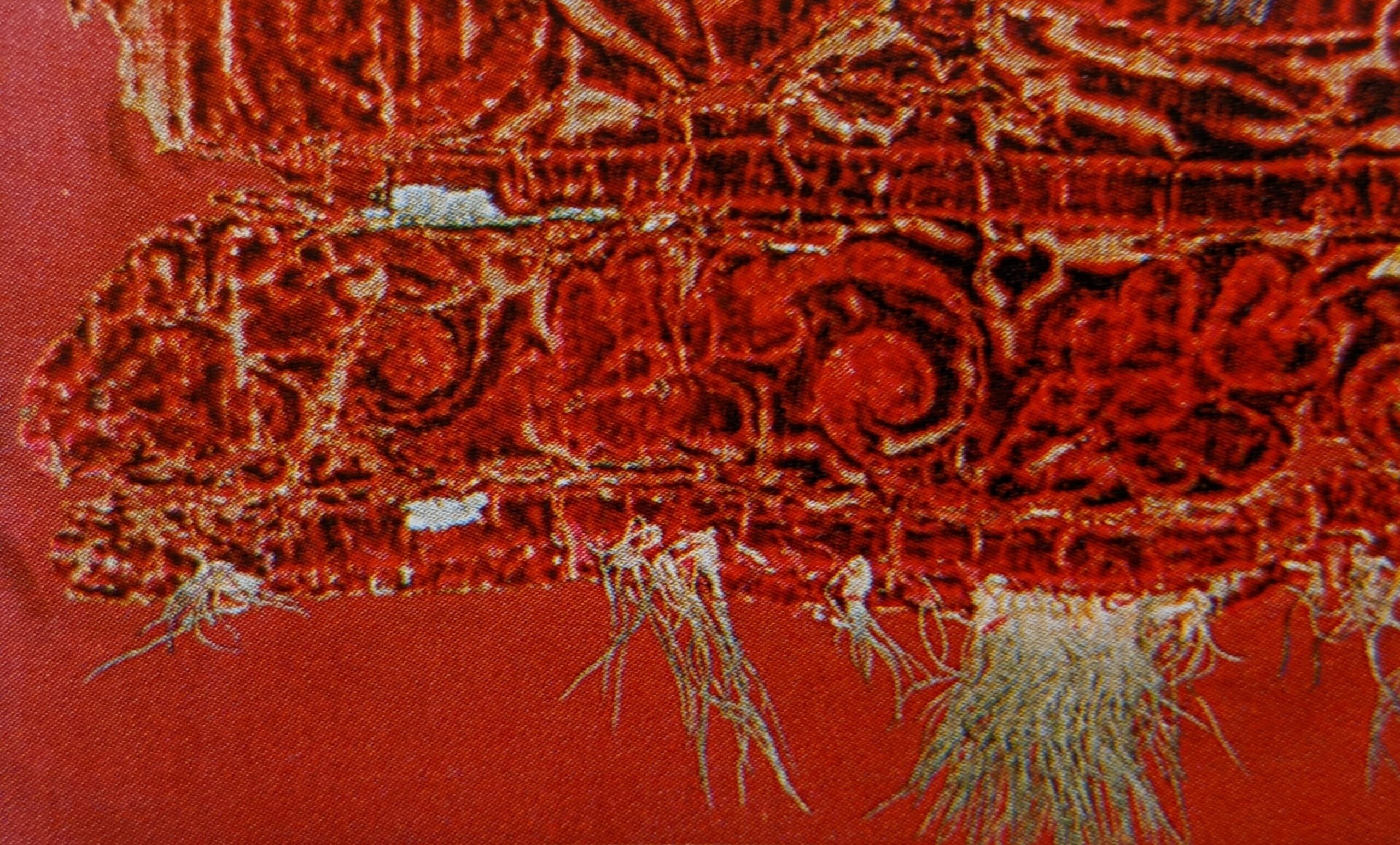
When received by the Museum, the parokhet was in a fragile and heavily deteriorated state. The velvet was worn and threadbare, riddled with holes and tears. Much of the original embroidery was missing, visible only as phantom impressions left in the soft velvet ground. Dust and damage further compromised the textile, rendering it unfit for display without intervention.
Conservation Process
Conservation required an exceptionally delicate approach. The poor condition of the velvet and appliqué meant that the textile could not be rolled or folded, as this would cause further irreparable damage. Work was carried out with the curtain lying flat, supported on an embroidery frame.
Prior to treatment, natural silk fabric and silk hair threads were dyed to match the original colors. Each surviving fragment was stabilized, and the appliqué carefully restored. Once restoration was completed, a new lining was sewn to the textile to provide structural support.
To ensure safe exhibition, additional fabric with Velcro strips was prepared and stretched over a board cut to the curtain’s exact dimensions. The restored curtain was then gently adjusted and secured to this support system, allowing for both preservation and display.
Current Display
Today, the restored Parokhet Tedeschi is proudly exhibited at the Museum of Italian Jewish Art in Jerusalem, where it can be appreciated as a rare and invaluable witness to Renaissance Jewish craftsmanship, devotion, and heritage.
Olga Negnevitsky