
Basket IAA
Restoration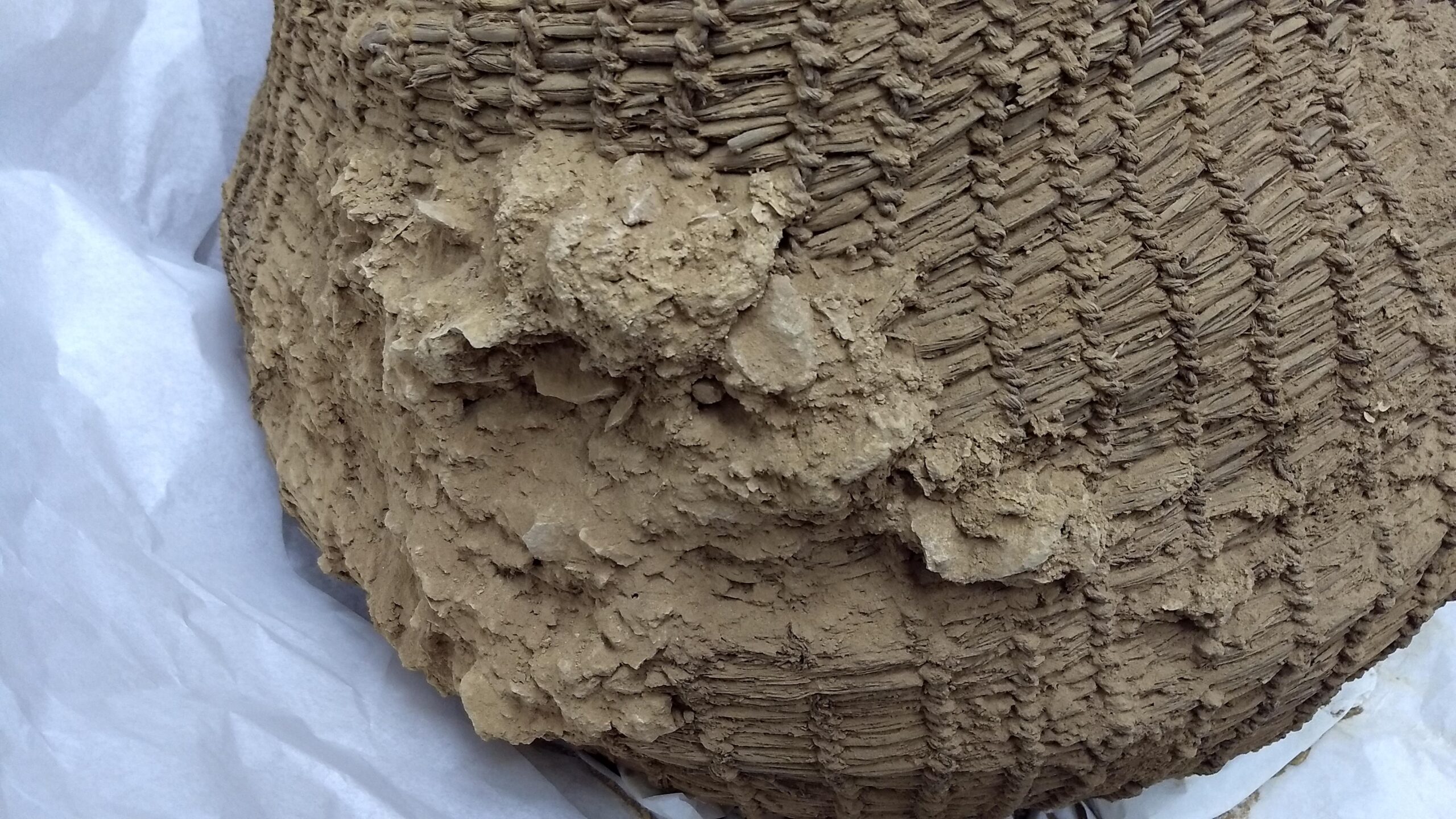
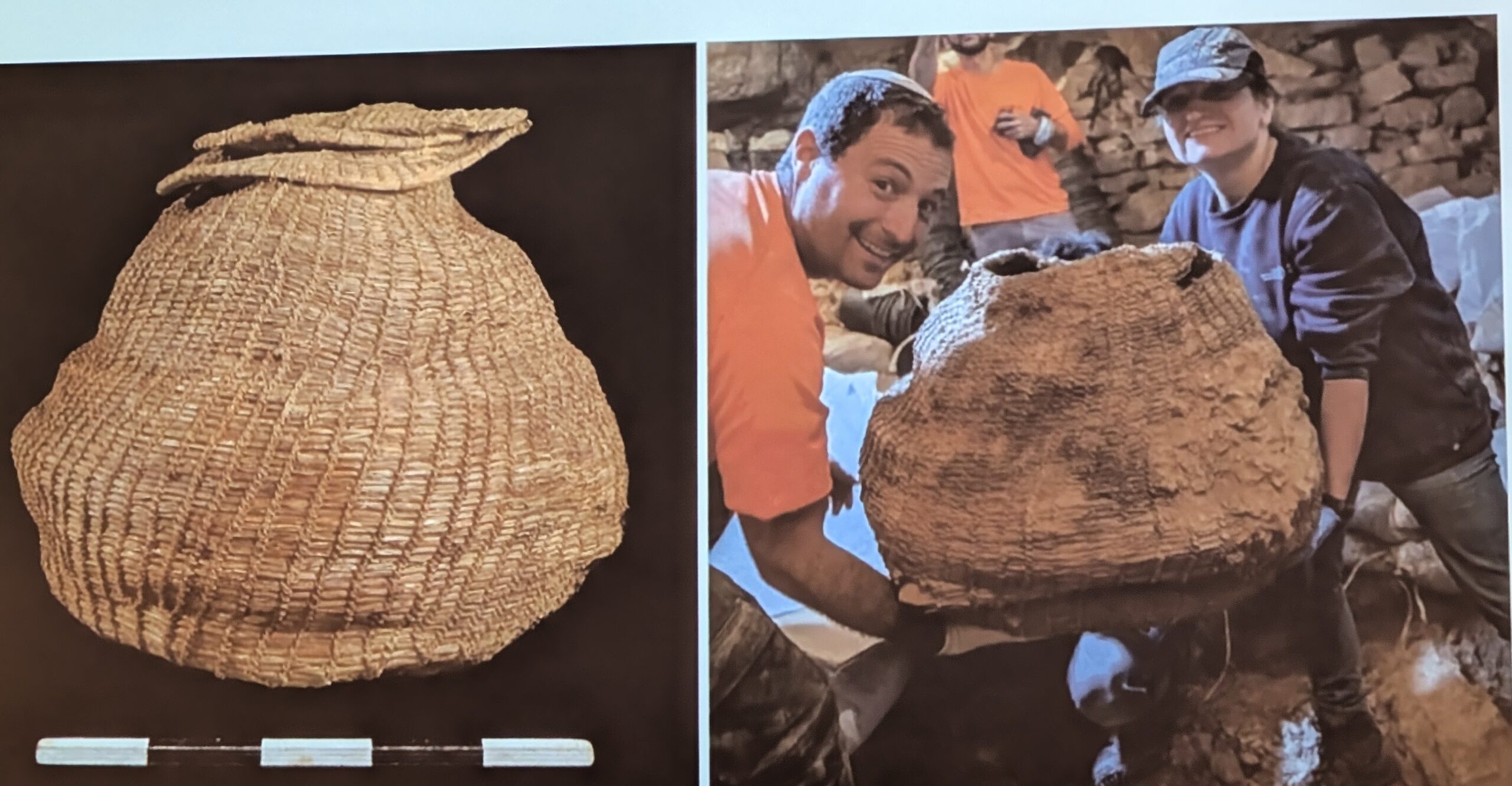
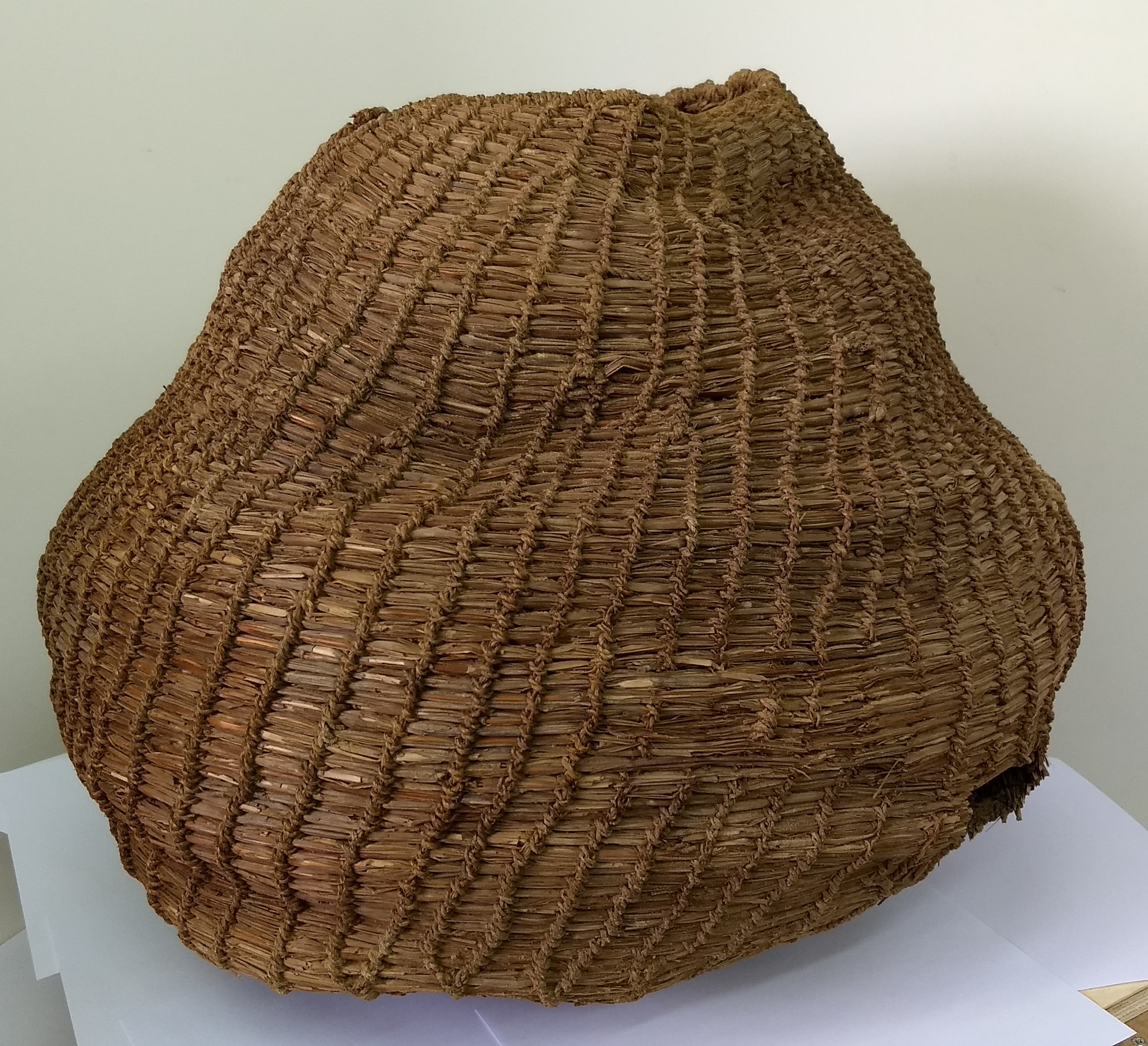
Basket IAA Restoration
Olga Negnevitsky
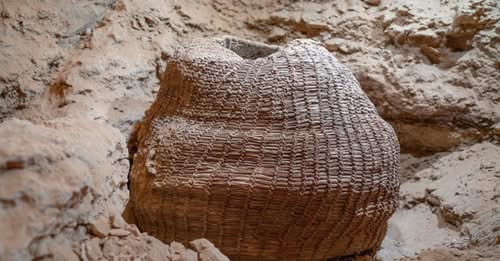
Initial condition: the basket with a lid arrived from the excavations full of dust and soil
The body of the basket was in relatively good condition.
Dimensions:
The basket body: width , upper diameter , bottom diameter, height,
The lid: diameter, thickness
1.Examination and cleaning experiments
Types of areas
- A) areas in stable condition
- B) fragile areas
- C) areas covered with heavy incrustation
Techniques used depending on the area
– different brushes and scalpel
– vacuum cleaning with a plastic net on the nozzle to prevent any damage to the basket straw
– cleaning with a pump squeeze ball (enema)
B.
– different brushes
– gentle cleaning with enema
– a segment of the area was treated with 3% B72 in alcohol in order to reinforce the straw
-Naama Sukenic, the Curator for organic materials, asked not to use B72 ( and no chemicals in general) in other areas in order to retain the authentic condition for research purposes.
C – areas with severe incrustation were cleaned using different techniques and tools (brushes, vacuum cleaner, scalpel).
In several cases a sharp scalpel was used in different directions in order to shatter the conglomerate of dirt and soil that actually turned into stone.
This was performed with utmost caution not to damage the straw.
- Cleaning (the body of the basket)
- It was decided not to clean the basket inside before the outside cleaning was finished. The heavy bulk of soil at the bottom of the basket served as a kind of “anchor” to keep the basket in stable position during cleaning.
The outside surface was cleaned with previously tested techniques ( described above)
- Due to the large dimensions of the basket, we had to prepare a three-step podium in order to clean the inside while keeping the basket in vertical position. We slowly took the soil out with a spoon ( wherever the soil was easily removable). The upper layer was more sandy and was, upon removal, stored in a separate container for examination.
The layer beneath was more dense, yet still removable by a spoon, was also stored in a separate container.
- In order to take all the soil out to be examined, we decided not to use vacuum cleaner. The basket was carefully overturned, and all soil collected. This could be done due to the relatively stable condition of the basket bottom.
Another reason for overturning the basket was the possibility to examine and photograph the bottom side. It was found stable and in no need of cleaning.
III. Findings
- On the surface of the upper sandy layer, a stick as found ( length , diameter ). One end was burnt. The object was sent for testing.
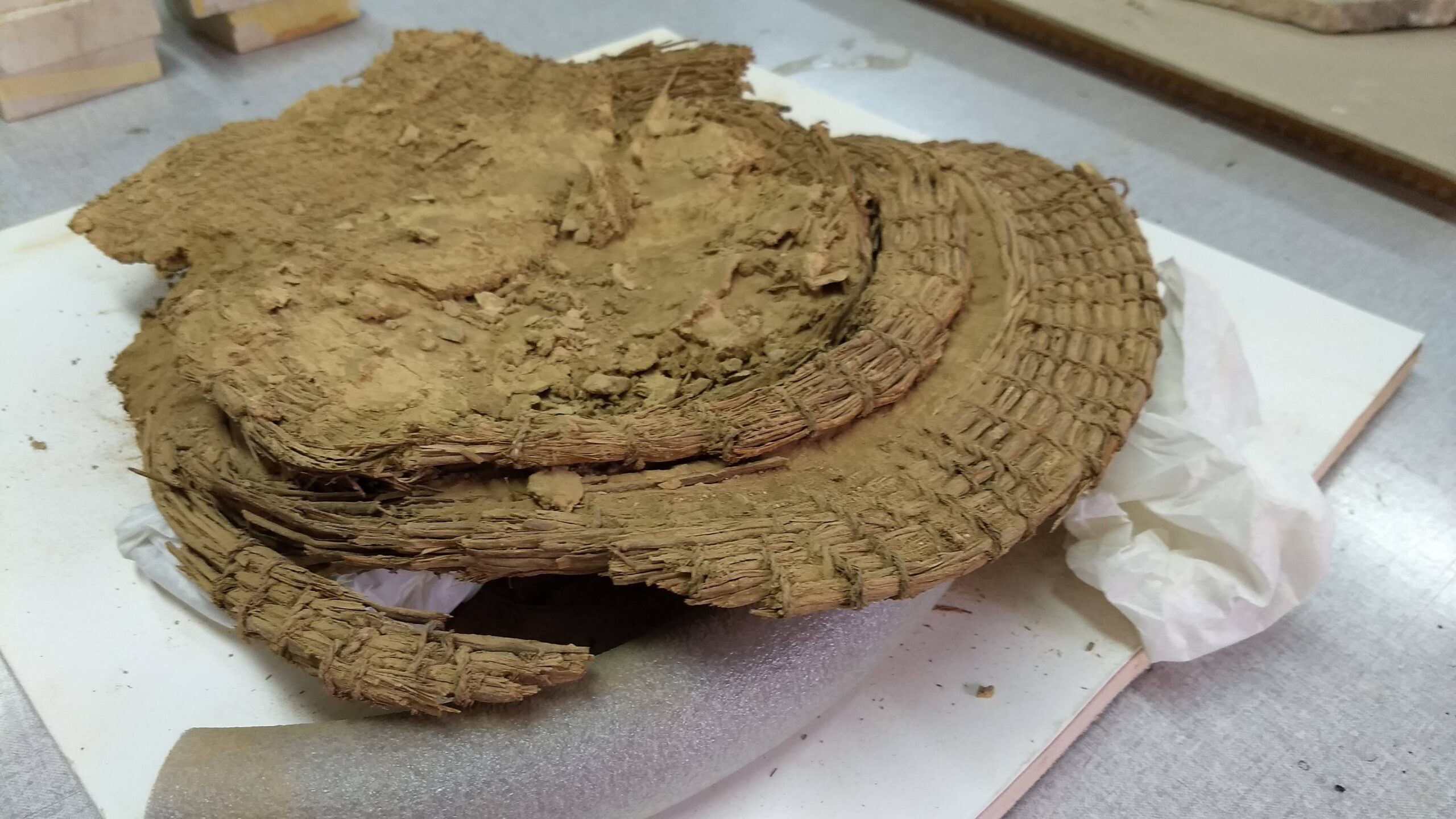
- During cleaning it was found that the basket actually has not one but TWO lids, one put on top of the other. The upper lid appeared to have a “patch”. The wickerwork of the patch looks different from the basket’s own lid. The first impression is that the patch was cut out from another basket.
Dimensions of the bottom lid:
Dimensions of the patch:
The binding agent used to “glue” the patch to the top of the basket’s own lid looks like argillaceous cement (rock material containing a lot of clay-like components), collected and stored for examination. In some areas the soil was very hard.
One fragment of the top lid was found detached ( dimensions ).
It was easy to separate the two lids. On the top of the bottom lid there were multiple burnt coal fragments. Two small (1.5-2 cm long) bone fragments were found among the coal pieces (removed and stored separately for examination)
- Cleaning and reinforcement of the lids
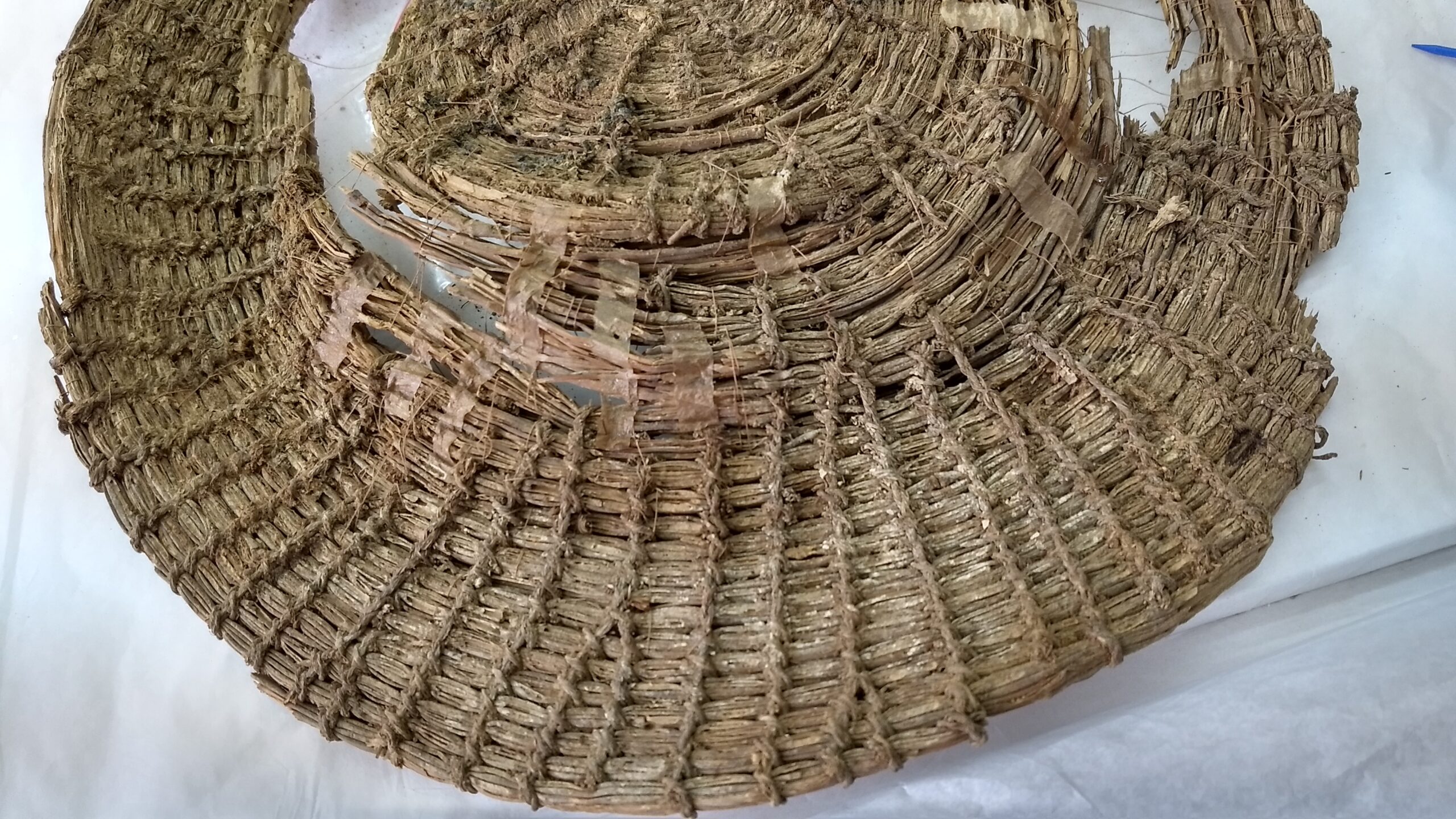
The cleaning was performed with the help of different brushes, scalpels, air (enema). The detached fragment was attached to the top lid by careful sewing with a cotton thread of matching color. To fix the fragment in place, thin metal wires were used temporarily and then removed.
The bottom lid was in fragile condition with traces of something being burnt on the lid. Multiple pieces of coal were removed and stored in a separate container for examination.
The lid was cleaned using brushes and enema. The cleaning process required especial cautiousness due to the object’s fragility.
After cleaning, the lid was temporarily fixed with wires that were gradually replaced by stiches with thread of a matching color.
The highly damaged loose straws were reinforced by the following technique:
- thin Japanese paper used for conservation was shaded with water colors to match color of the straw.
- thin strips of the paper were glued to especially fragile straws (adhesive Methyl Cellulose, viscosity 2%, solution in distilled water).
- A Hypothesis
It might be suggested that some cooking was performed on the bottom lid, and the stick with a burnt end was used for stirring the stuff and then fell into the basket.
Olga Negnevitsky