
Four Linen Textiles, 6,000 Years Old – From the Judean Desert - IAA
Restoration
Restoration of Four Linen Textiles, 6,000 Years Old – From the Judean Desert
The Judean Desert has yielded some of the most remarkable archaeological treasures ever discovered, preserved by its dry climate in caves that once served as places of refuge, solitude, and concealment. Alongside the Dead Sea Scrolls and many other finds, one discovery stands out as both extraordinary and deeply moving: the burial assemblage from the Cave of the Warrior in Wadi el-Makkukh, dating to the early fourth millennium BCE.
The Cave of the Warrior
Discovered in 1993 by Dror Barshad and Idan Shaked, the cave contained the contracted skeleton of a man, carefully wrapped in linen textiles. He was accompanied by objects of personal use: one finely made wooden bowl, a coiled basket, sandals, a bow and arrows, a large flint knife, and textiles. All were stained with red ocher—an ancient symbol of life and regeneration—suggesting a burial rite of deep spiritual meaning.
The quality and craftsmanship of these objects indicate that the deceased was a person of high status. The bow, deliberately broken as part of a funerary ritual, is the earliest known double-convex bow in the Near East, recalling forms depicted in Egyptian predynastic art. The large flint knife, over 30 cm long, is a masterpiece of precision and balance.
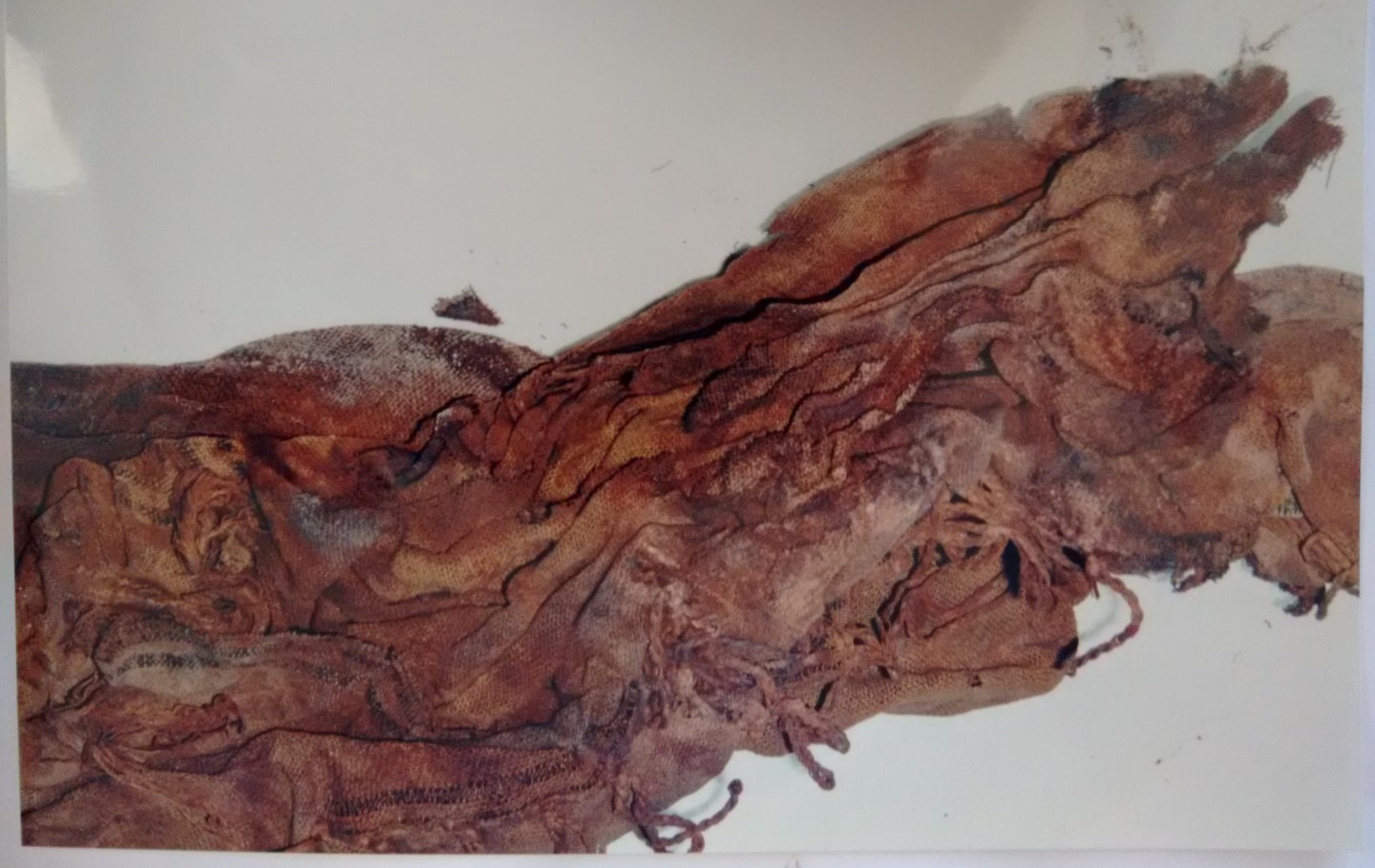
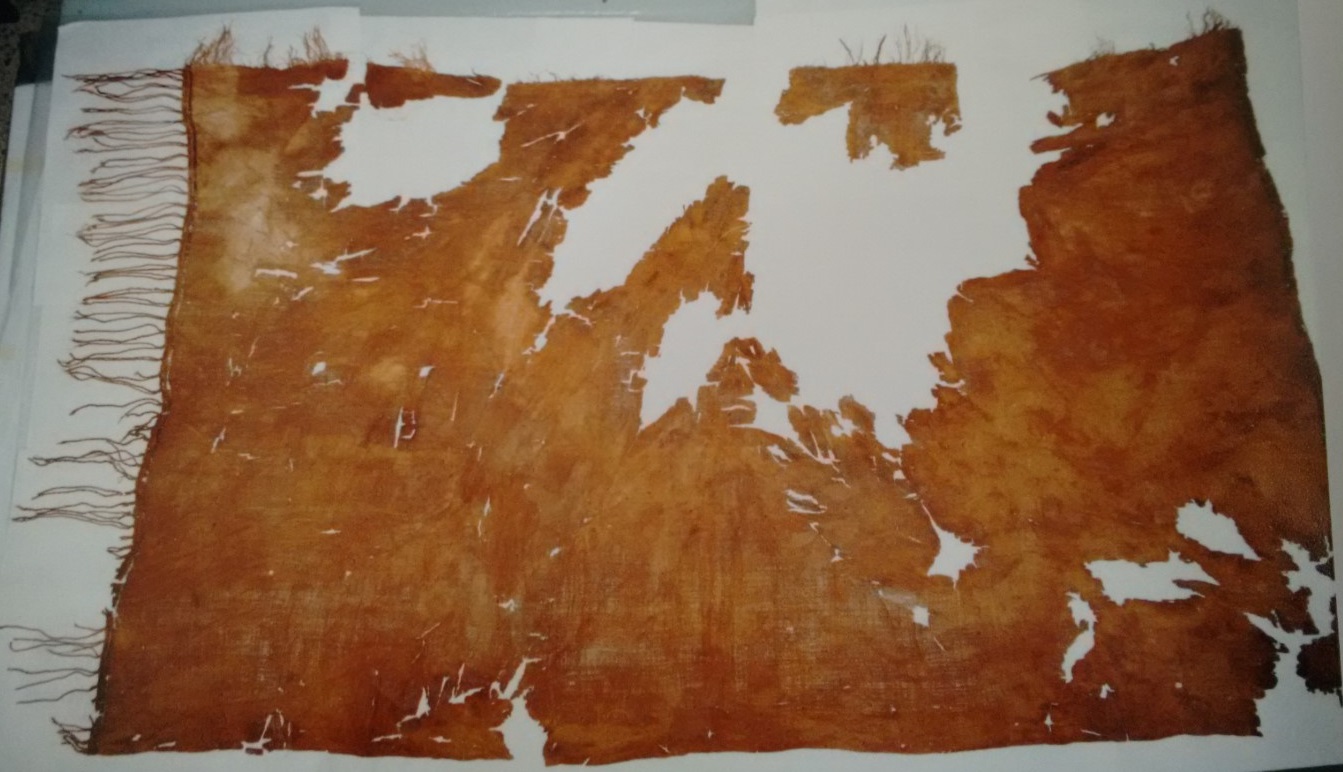
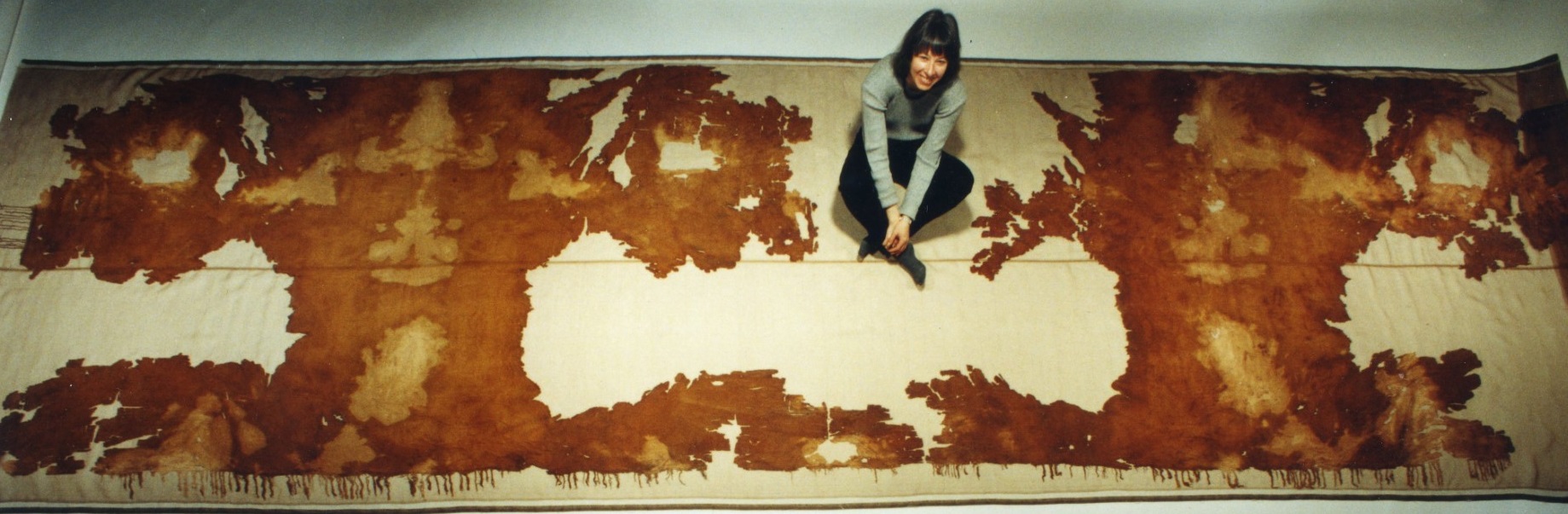
At the heart of the assemblage were four linen textiles, exceptionally rare survivals of perishable material. Inside the textile bundle were a large wrapping sheet, a tunic-like textile, a bandage, and a sash-like strip. The most striking of these is the large sheet, measuring approximately 7 × 2 meters, woven with dark brown decorative bands and fringes. Remarkably, this textile had ancient repairs made during its original period of use, suggesting that it was not created solely for burial but had likely served the deceased in life before being reused as his shroud.
Folded like an envelope around the body, the large textile enclosed the others, forming a multilayered wrapping of great refinement. Whether worn in life or dedicated to the afterlife, these cloths testify to a sophisticated textile culture with clear affinities to early Egyptian weaving traditions.
Conservation Process
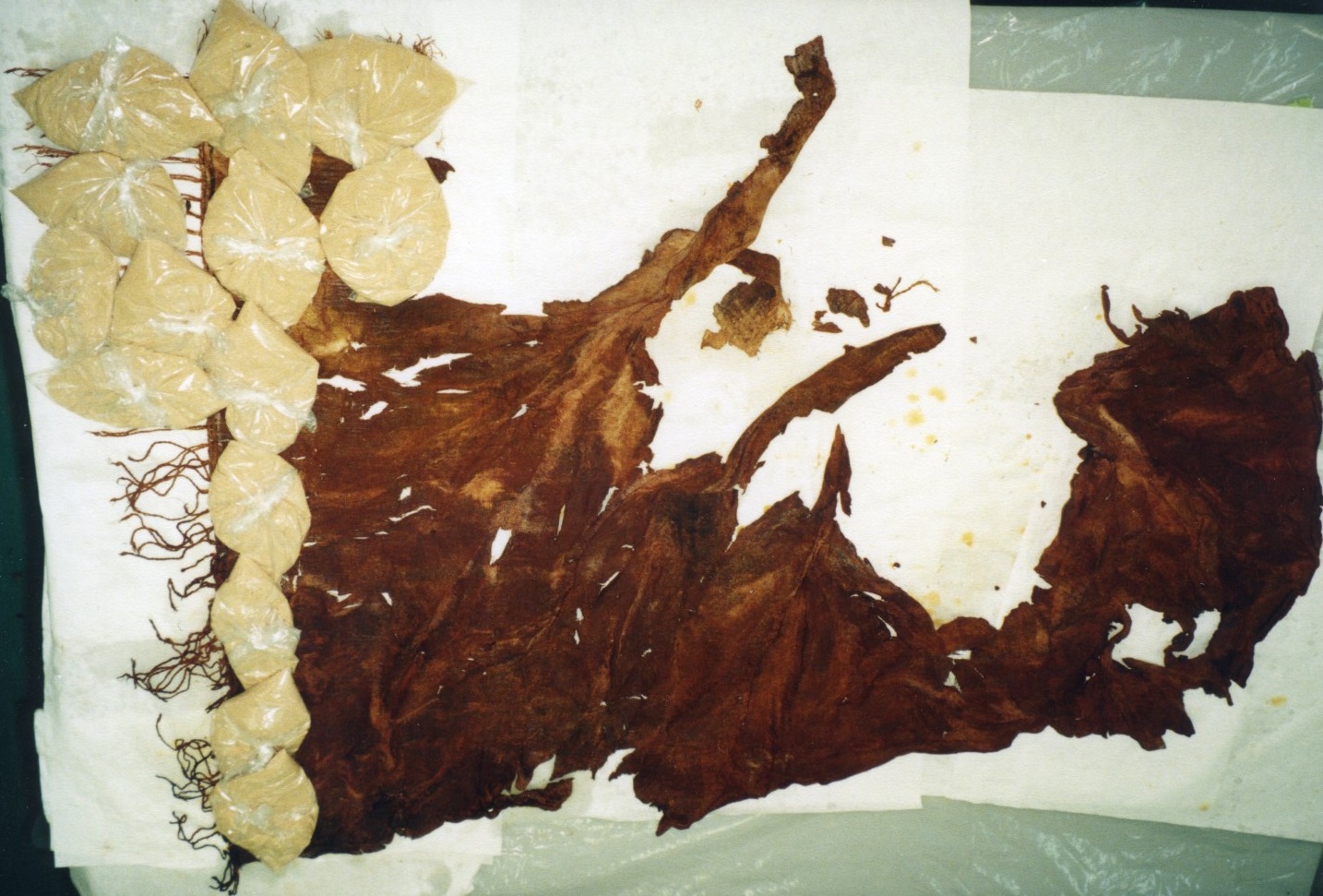
When uncovered, the textiles were fragile, stiffened by millennia of desert dryness, stained with ocher, and altered by time. In the Textile Conservation Laboratory of the Israel Antiquities Authority, they were painstakingly opened, layer by layer, from what had become a brittle, compacted bundle.
Each textile underwent careful cleaning, softening, flattening, and stabilization. Treatments were individually adapted to the fabric’s structure and condition. To secure their preservation, the textiles were mounted between specially dyed transparent support fabrics and placed on padded display frames. For the large wrapping sheet, a custom-made Plexiglass cylinder was designed to support and protect the textile safely.
The conservation process was thoroughly documented—through written reports, photographs, and video recordings—while experts performed fiber identification, dye analysis, and technical studies, contributing valuable data to the understanding of prehistoric textile manufacture and ritual use.
Legacy of the Warrior’s Textiles
The Warrior’s burial remains unique. Unlike other Chalcolithic graves, it contained no pottery, beads, or pendants—only objects of perishable material, intimate in scale and symbolic in meaning.
The textiles, in particular, embody both fragility and endurance: threads spun and woven six millennia ago that, against all odds, still speak to us today. To handle them in conservation was to touch the unbroken continuity of human craft, care, and remembrance.
Today, the restored textiles stand as a silent bridge between the living and the ancient dead, preserving the story of a man whose burial reflects dignity, artistry, and a deep reverence for life itself—even beyond death.
Olga Negnevitsky