
The Windows of Bet She’an IMJ
Restoration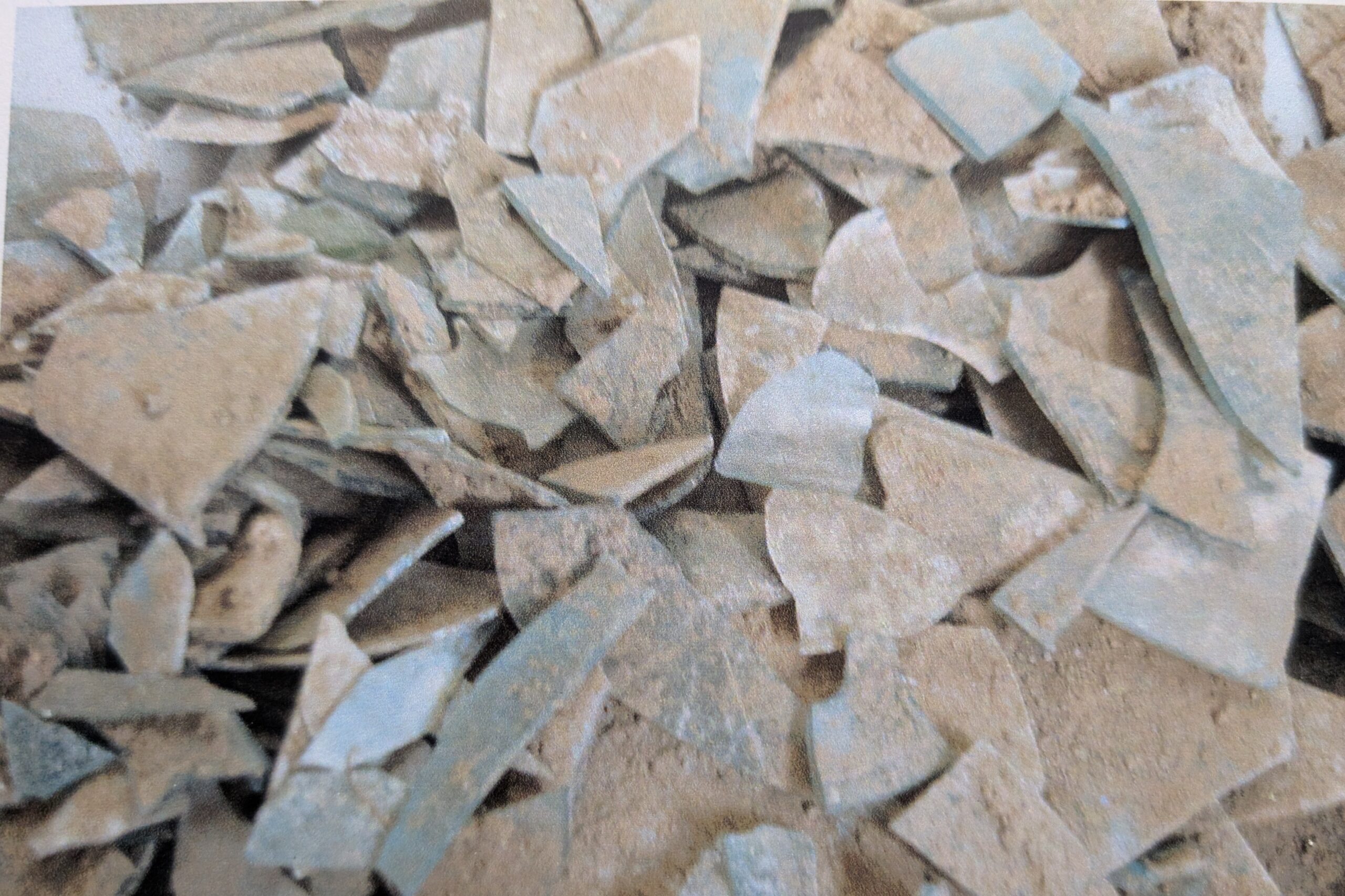
The Windows of Bet She’an
Between 1999 and 2013, I worked as an Object Conservator at the Israel Museum in Jerusalem — years filled with countless artifacts, each with its own whisper of history.
But among them all, one project stood apart — the restoration of the ancient glass windows from Bet She’an.
A City Silenced by an Earthquake
In 1994, during excavations in Bet She’an (ancient Scythopolis), archaeologists from the Israel Antiquities Authority uncovered the remains of a glass workshop — a frozen moment from the morning of January 18, 749 CE, when a devastating earthquake brought the thriving city to ruin.
Buried under layers of destruction were thousands of glass fragments — vessels, ornaments, and the delicate shards of rectangular and round windows, still glimmering faintly beneath centuries of dust.
For over twelve hundred years, these silent witnesses to catastrophe slept beneath the earth, waiting to be touched again by human hands.
The Call to Restore
During the grand renovation of the Israel Museum (2007–2010), the new Archaeological Glass Gallery was planned — a home for the fragile beauty of ancient craftsmanship. The museum and the IAA agreed to include the Bet She’an windows among its centerpiece displays.
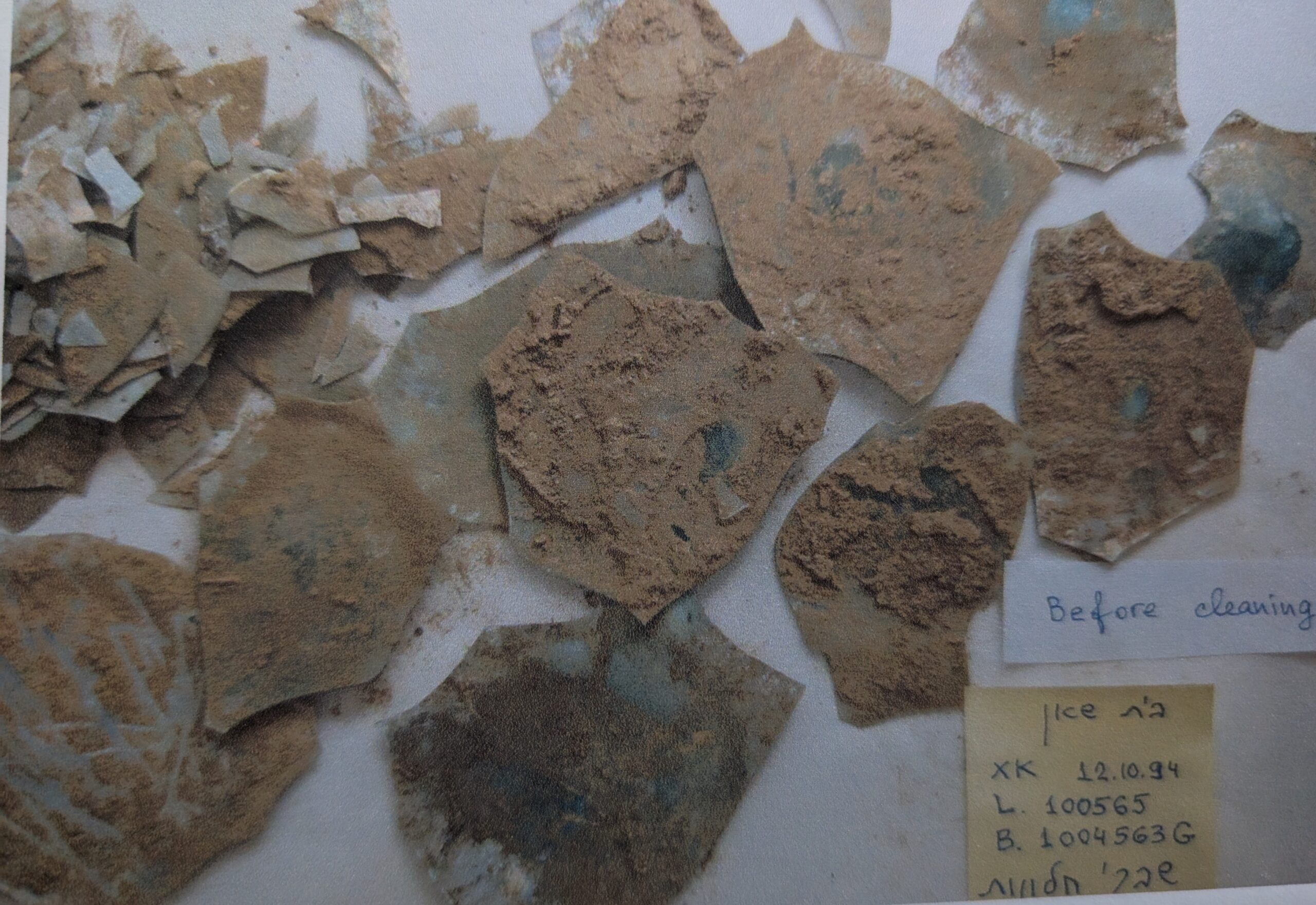
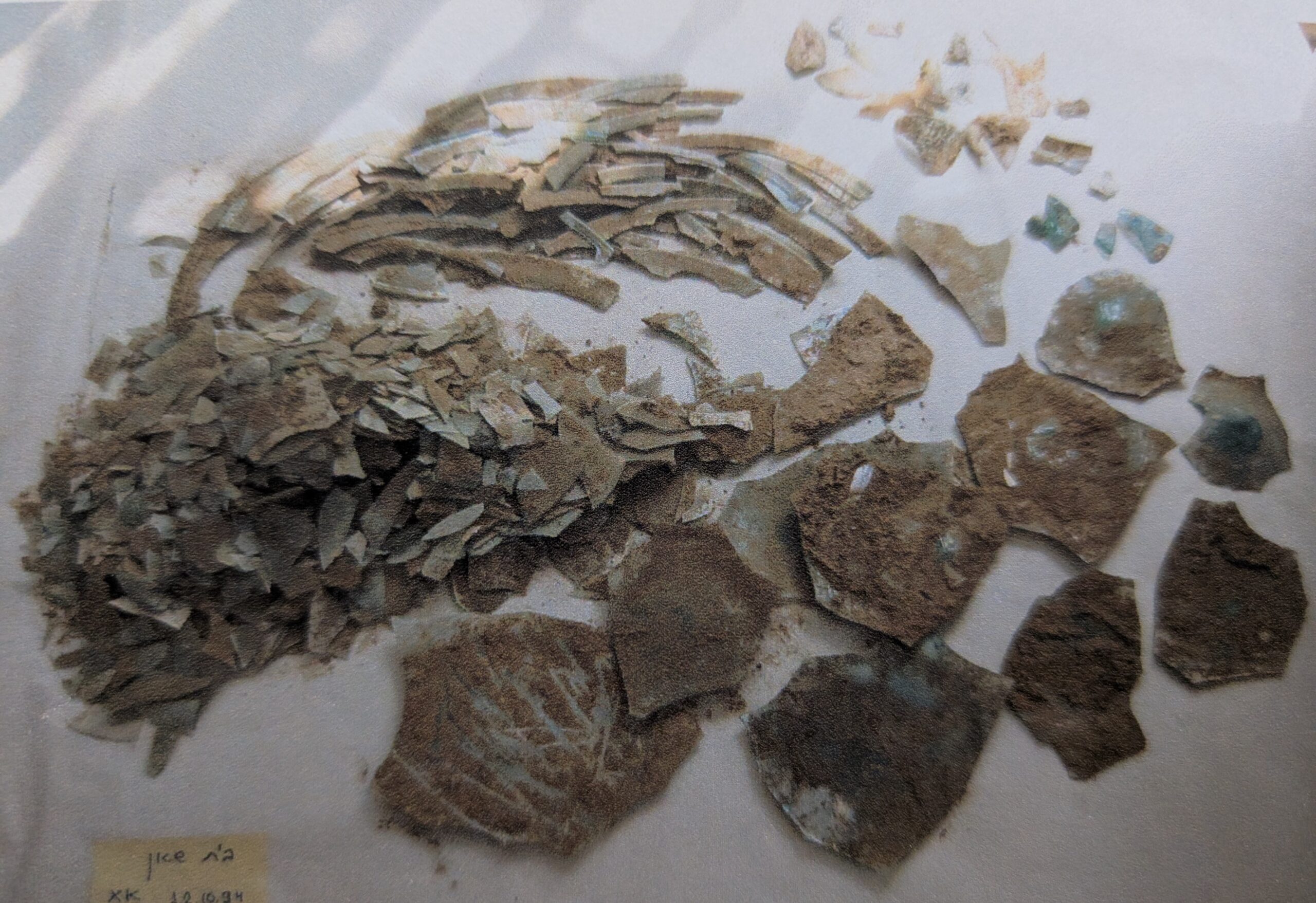
In the summer of 2009, five heavy boxes arrived in the IMJ. Inside — nothing but chaos: thousands of dirt-encrusted glass fragments, brittle and iridescent, fragments of light itself.
The challenge was immense, the schedule unforgiving. Yet the task carried a quiet thrill: to reassemble windows that last reflected sunlight more than a millennium ago.
Reconstructing Light
I began by gently cleaning each fragment with soft brushes — removing the desert soil that had cradled them since the earthquake. Then, one by one, the pieces were sorted by color, curvature, edge type, and patina, until families of glass began to emerge from the confusion.
Like a puzzle with no guiding image, I searched for matches — tiny joints that aligned by a fraction of a millimeter. Each successful join felt like a rediscovered heartbeat.
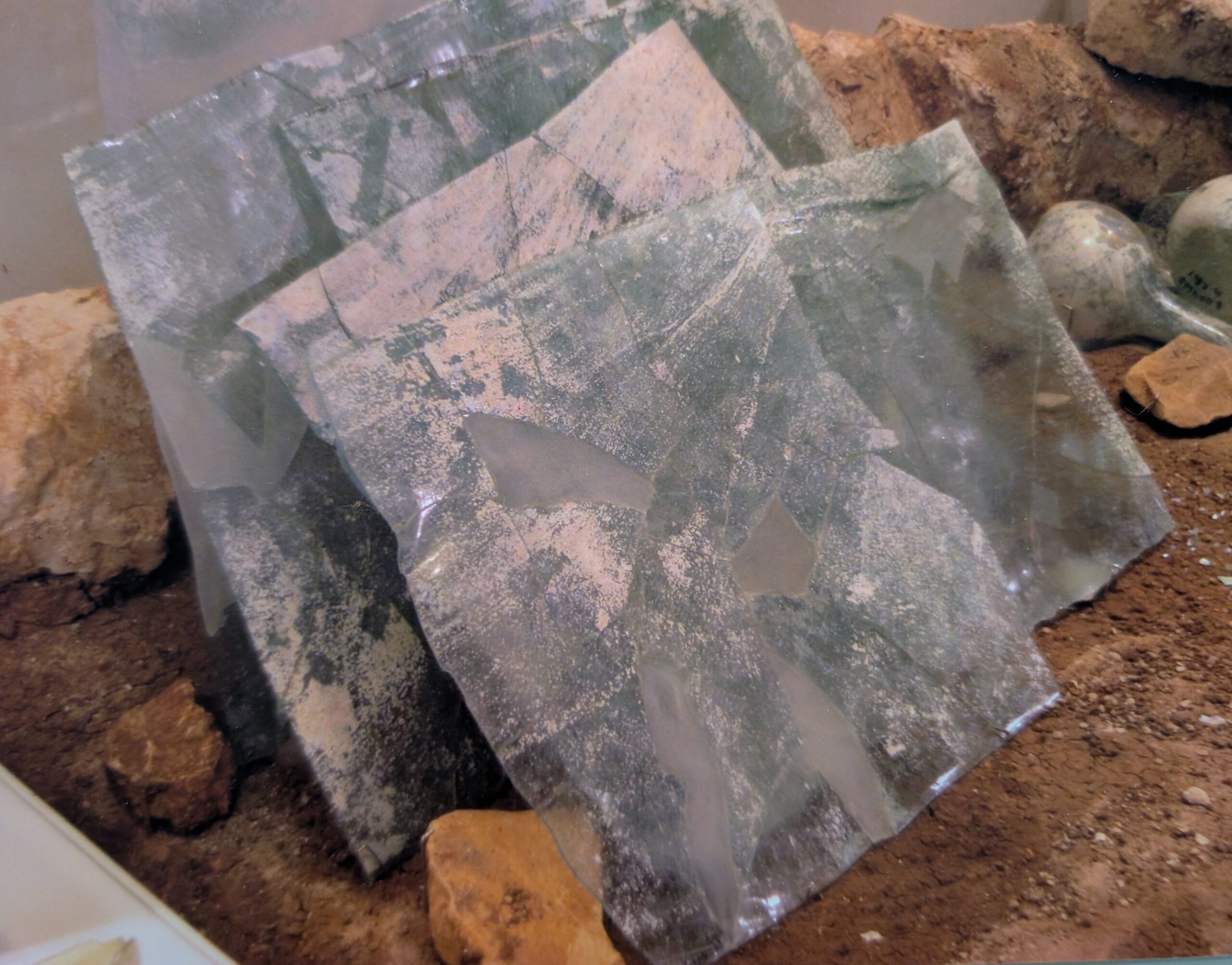
Using Araldite 2020, a transparent epoxy resin favored for conservation, I reunited the fragments and filled in missing sections. The filled areas were then delicately tinted with watercolor, blending invisibly into the authentic surface tones — restoring not perfection, but continuity.
Revealing the Forgotten Workshop
Time pressed. In just a few months, from among thousands of shards, I reconstructed seven rectangular windows and two round ones — more could have emerged, given more time.
Each window was not simply a restored object, but a story of a moment before destruction — the very panes that once filtered light into the workshop, now filtering light again in the museum’s display.
Since August 1, 2010, the Windows of Bet She’an have stood in the Israel Museum’s renewed Glass Gallery, evoking that fateful instant when the glassmaker’s world collapsed — and the luminous legacy of his craft was sealed within the earth.
A City of Light and Silence
Bet She’an — Nysa Scythopolis — lies in the northern Jordan Valley, one of the oldest cities in the Near East, inhabited since the fifth millennium BCE. The earthquake of 749 CE marked its dramatic end, preserving its final breath beneath layers of stone and dust.
To restore the windows was, in a sense, to open them again — not to the Roman sun, but to the museum’s gentle light — letting history, after centuries of darkness, shine once more.
Olga Negnevitsky